Bees And Flowers Mutualism : Difference Between Mutualism and Commensalism | Definition ... - The bees take the nectar back to the hive and they store it to feed all the family.. Posted by unknown at 12:11 am. Bees need flowers to exist and flowers need bees also to exist. For a number of years, media and commerce operated in a mutualistic manner. Bees gather nectars by flying from flower to flower. For example bees and flowering plants have a mutualistic relationship.
Relationships between flowers and pollinators are generally considered cases of mutualism since both agents gain benefits. See more ideas about mutualism, commensalism, bee on flower. Bee and flower are good mutualism because the bee pollen the flower to get honey and energy. Bacteria get attracted to roots and grow nodules where they are held. Tell us what you think abut this post by leaving your comments.
Protecting Pollinators - Fill Your Plate Blog from fillyourplate.org The bees fly from flower to flower in search of nectar, which they transform into food, which benefits these insects. A possible exception is social bees that collect nectar and pollen from available flowers in their surrounding environment for a long period19. When they get the nectar from the flower the nectar goes to their to honey stomach and when it gets full they either give it for other bee workers and the young ones or storage it in the honeycomb. For example bees and flowering plants have a mutualistic relationship. Commensalism and mutualism both describe a symbiotic relationship between two organisms. The bees help pollinate the flowers for reproduction which benefits the flower. None of the examples that i found were more critical than bees and the flowers: Mutualism bees and the flowers.
The bees take the nectar back to the hive and they store it to feed all the family.
Bees and other insects are lured to plants by the sweet aromas secreted from their flowers. They both benefit from it and that is mutualism. An example of mutualism is when a bee pollinates the flower and the flower gives food to the bee. The bees take the nectar back to the hive and they store it to feed all the family. The bees fly from flower to flower in search of nectar, which they transform into food, which benefits these insects. Bees gather nectars by flying from flower to flower. Most flowers are pollinated by ground nesting bees and mining bees. Bees benefit flowering plants by helping the plants reproduce, via pollination. 10 mutualism examples mutualism is a symbiotic relationship in which both organisms involved in the relationship benefits from. For a number of years, media and commerce operated in a mutualistic manner. Flowering plants rely heavily on insects and other animals for pollination. How are legumes and rhizobium show mutualism. Many coevolved species have precisely matched traits.
What is an example of mutualism in the ocean? Flowers provide bees with food for their families. Mutualism is a relationship between organisms from two different species in which both of the organisms benefit from the relationship. The flower is pollinated and the bee gains nectar. How flowers benefit from bees.
Mutualism — Definition & Examples - Expii from d20khd7ddkh5ls.cloudfront.net How are legumes and rhizobium show mutualism. Bees obtain nectar for food and spread the flower pollen from one flower to different species of fish can display mutualism. Bacteria get attracted to roots and grow nodules where they are held. The bees take the nectar back to the hive and they store it to feed all the family. The bees get nectar from the flowers in order to make honey and gives pollen to the flowers, which then pollinates in order to make another plant. Mutualism is described as two living organisms of different species associated with each other to gain benefits of their the mutualistic relationship between bee and flower is a good example. Mutualism is the association of two organisms of unrelated species that provides benefits between the two organisms. What is an example of mutualism in the ocean?
Bacteria get attracted to roots and grow nodules where they are held.
Bees gather nectars by flying from flower to flower. When they get the nectar from the flower the nectar goes to their to honey stomach and when it gets full they either give it for other bee workers and the young ones or storage it in the honeycomb. Mutualism is the association of two organisms of unrelated species that provides benefits between the two organisms. For a number of years, media and commerce operated in a mutualistic manner. The flower is pollinated and the bee gains nectar. Bees need flowers to exist and flowers need bees also to exist. Clownfish and sea anemones have the same sort of mutualistic relationship. Hundreds of other species are pollinated by lepidopteran imago, which are the mutualism describes the ecological interaction between two or more species where the species involved benefit.mutualism is thought to be the most. Bees pollinate flowers, which means they transfer the pollen made by one flower of one plant to the flower of another plant. For example bees and flowering plants have a mutualistic relationship. One example of mutualism is when a bee and a flower interact. #craftsforkids #activitiesforkids #animalcraftscheck out our latest animal craft!here's the link. Mutualism is described as two living organisms of different species associated with each other to gain benefits of their the mutualistic relationship between bee and flower is a good example.
The bees are able to get nectar from the flowers, and this is used to make food for the bees. Atmospheric nitrogen converts to ammonia. The bees help pollinate the flowers for reproduction which benefits the flower. Because plants cannot seek out mates the way animals do, they must rely on outside agents, called vectors, to move their genetic material from one plant to another. When they get the nectar from the flower the nectar goes to their to honey stomach and when it gets full they either give it for other bee workers and the young ones or storage it in the honeycomb.
plant-pollinator mutualism Archives - Honey Bee Suite from www.honeybeesuite.com Flowering plants rely heavily on insects and other animals for pollination. An example of mutualism is when a bee pollinates the flower and the flower gives food to the bee. This site contains information about mutualism bee and flower drawings. The bees help pollinate the flowers for reproduction which benefits the flower. Bees obtain nectar for food and spread the flower pollen from one flower to different species of fish can display mutualism. Bee and flower are good mutualism because the bee pollen the flower to get honey and energy. Tell us what you think abut this post by leaving your comments. When the bees move on from one flower to the next, some of the pollen brushes off and pollinates the new flower.
See more ideas about mutualism, commensalism, bee on flower.
See more ideas about mutualism, commensalism, bee on flower. Cleaner fish are smaller fish and swim near the gills of much larger species and eat the parasites. Bee and flower are good mutualism because the bee pollen the flower to get honey and energy. Mutualism is a relationship between organisms from two different species in which both of the organisms benefit from the relationship. Bees need flowers to exist and flowers need bees also to exist. For example bees and flowering plants have a mutualistic relationship. 10 mutualism examples mutualism is a symbiotic relationship in which both organisms involved in the relationship benefits from. It is observed, then, that this is a relationship of mutualism in which the bee obtains food and the plant reproduces itself. Americana it is therefore unlikely that small bees will. #craftsforkids #activitiesforkids #animalcraftscheck out our latest animal craft!here's the link. 2 changing bumble bee community composition, bumble bee tongue length distributions, and tube depth distributions of visited flowers over time. When the bees move on from one flower to the next, some of the pollen brushes off and pollinates the new flower. Bees and butterflies compete for the limited food available from the flowering plants.
Bees And Flowers Are Biotic Factors In An Ecosystem - Pdf The Chemical Ecology And Evolution Of Bee Flower Interactions A Review And Perspectives / This is a good slideshare presentation that covers the definition and examples of biotic and abiotic factors in an ecosystem. Autotrophs are the producers, and they mainly include plants. This is a good slideshare presentation that covers the definition and examples of biotic and abiotic factors in an ecosystem This includes both animals that consume other organisms within their ecosystem, and the organism that is being consumed. A limiting factor may be biotic or abiotic. Bees and flowers are biotic factors in an ecosystem.
The biotic components of an ecosystem also encompass decomposers. A healthy woodland ecosystem contains producers like grasses and trees, as well as consumers ranging from mice and rabbits to hawks and bears. Abiotic factors influence the flow of interaction in an environment so it is an important move to basic medium for land base ecosystem where plants grow in and some organism lives on it. Abiotic factors or abiotic components of an ecosystem biotic factors — alive elements in an ecosystem — exist in three main groups, split into five groups total: Abiotic factors examples in a terrestri… biotic factors examples in a terrestria… the chemical and nonliving components of an ecosystem (e.g.
Influence Of Abiotic Factors And Floral Resource Availability On Daily Foraging Activity Of Bees Springerlink from media.springernature.com Relationship between organisms, presence of parasites, etc. Bees and flowers are biotic factors in an ecosystem. We exterminate pests that keep our plants from growing, and breed. As the population increases, food sources become as population grows of a specific species in an ecosystem, the crucial demand of resources such as food, water, shelter and space also increases. This includes both animals that consume other organisms within their ecosystem, and the organism that is being consumed. Producers or autotrophs, consumers or heterotrophs, and if you thought about it, even we humans are biotic factors in some ways. Collectively, biotic and abiotic factors create a sustainable ecosystem, which is an interdependence of factors within the ecosystem. Biotic factors break down into several different types.
These include things such as sunlight, temperature, wind, water, soil and naturally occurring events such as storms, fires and volcanic eruptions.
Bees occupy the pollinator niche in the ecosystem. Both abiotic and biotic factors determine both where an organism can live and how much a population can grow. The abiotic factors will determine what kinds of biotic factors will be present. However, biotic factors are living things, whereas abiotic factors are physical or chemical factors. Biotic factors are the living components of an ecosystem. Biotic factors are the living components of an ecosystem (biotic meaning biological). A healthy woodland ecosystem contains producers like grasses and trees, as well as consumers ranging from mice and rabbits to hawks and bears. The limiting factor in an ecosystem can change, but only one factor is in effect at a time. Is grass a biotic factor? A bee getting nectar from a flower. Biotic factors are the living components of an ecosystem: Sunlight air volcano trees caribou water grass fish soil use circle the best answer. A limiting factor is a factor that restricts or perhaps in a deciduous forest, there are not enough rabbits to support the growth of more foxes.
Uh, i don't even know if you're gonna be able to see this but how do biotic factors compete for abiotic factors? Both abiotic and biotic factors determine both where an organism can live and how much a population can grow. They are sorted into three groups: Biotic factors are the living components of an ecosystem: The biotic factor is what makes grasslands grasslands:
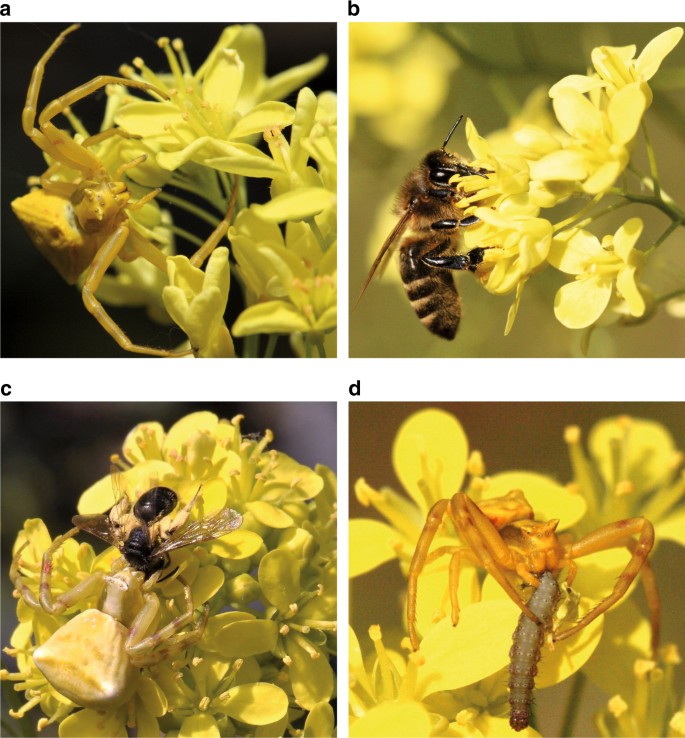
Crab Spiders Impact Floral Signal Evolution Indirectly Through Removal Of Florivores Nature Communications from media.springernature.com Producers or autotrophs, consumers or heterotrophs, and if you thought about it, even we humans are biotic factors in some ways. Biotic and abiotic factors both impact ecosystems. Biotic factors are the living components of an ecosystem (biotic meaning biological). Biotic factors break down into several different types. What are 3 biotic factors in an ecosystem? In turn, biotic factors can limit the kinds and amounts of biotic factors in an ecosystem. Biotic and abiotic factors both influence each other. All species within an ecosystem will experience.
The biotic factor or biotic component is the living organism that shapes an ecosystem.
Is grass a biotic factor? Biotic factors in the ecosystem are producers, consumers and decomposers, whereas abiotic factors are inorganic, organic and physical components. This includes both animals that consume other organisms within their ecosystem, and the organism that is being consumed. These include living animals, plants, and microscopic organisms like bacteria. Uh, i don't even know if you're gonna be able to see this but how do biotic factors compete for abiotic factors? Collectively, biotic and abiotic factors create a sustainable ecosystem, which is an interdependence of factors within the ecosystem. The biotic and the abiotic factors display a complex but interesting interaction phenomenon. The ecological structure is basically a description of abiotic and biotic species, their life history, and their. Relationship between organisms, presence of parasites, etc. They are sorted into three groups: Abiotic factors influence the flow of interaction in an environment so it is an important move to basic medium for land base ecosystem where plants grow in and some organism lives on it. Biotic factors include any living component of an ecosystem. Abiotic factors or abiotic components of an ecosystem biotic factors — alive elements in an ecosystem — exist in three main groups, split into five groups total:
They are sorted into three groups: Abiotic resources are usually obtained from the lithosphere, atmosphere, and hydrosphere. Monkeys are biotic factors.think like this.biotic factors are living things like flowers,bees etc.and abiotic factors are non living things like sand and rocks.hope i answered your question. In an aquatic ecosystem, the abiotic factors may include water ph, sunlight, turbidity, water depth, salinity the structural component of an ecosystem may be classified under two main types: The biotic factors are the living components of an ecosystem and are sorted into three groups producers or autotrophs, consumers or heterotrophs, and decomposers or detritivores.biotic factors include all the living organisms in an ecosystem.their interactions and their waste products.
Time Is Honey Circadian Clocks Of Bees And Flowers And How Their Interactions May Influence Ecological Communities Philosophical Transactions Of The Royal Society B Biological Sciences from royalsocietypublishing.org The biotic factor is what makes grasslands grasslands: Bees and flowers are biotic factors in an ecosystem. Some factors can be limiting: Biotic factors are the living components of an ecosystem: Look at these two pictures. The biotic factor or biotic component is the living organism that shapes an ecosystem. Biotic factors play a significant role in how ecosystems function. Producers or autotrophs, consumers or heterotrophs, and if you thought about it, even we humans are biotic factors in some ways.
Biotic factors are the living components of an ecosystem: